
Photo by: RDNE Stock Project
If you’re always researching strength training ideas like me, then you may have wondered which body position is best. This article talks about the best exercise positions for working out. All of them have a place in any individual’s workout routine. Standing, sitting, and kneeling are great options, because different muscle groups are affected.
Lying down has its own set of benefits too. Each position changes how muscles work, how much stability is required, and which muscles are emphasized. I tend to sit or stand mostly, but kneeling brings advantages and I’ve been incorporating the position where I can.
Tall kneeling (on both knees) – strengthens the core and glutes removing lower body assistance. This position engages hips, abdominal and obliques and is favorable for posture and balance. Lifting from your knees trains muscles that are often underused. Appropriate exercises include bicep curls, shoulder presses, and triceps extensions. I’ve been kneeling while using the punching bag too!
Half kneeling (on one knee) – opens the hip flexors. This stance is also referred to as “split kneeling.” It develops strength and stability in the trunk and core and is an important functional movement in everyday life. Kneeling removes momentum from the lower body. Exercise examples include medicine ball throws, kettle bell halos, and woodchoppers.
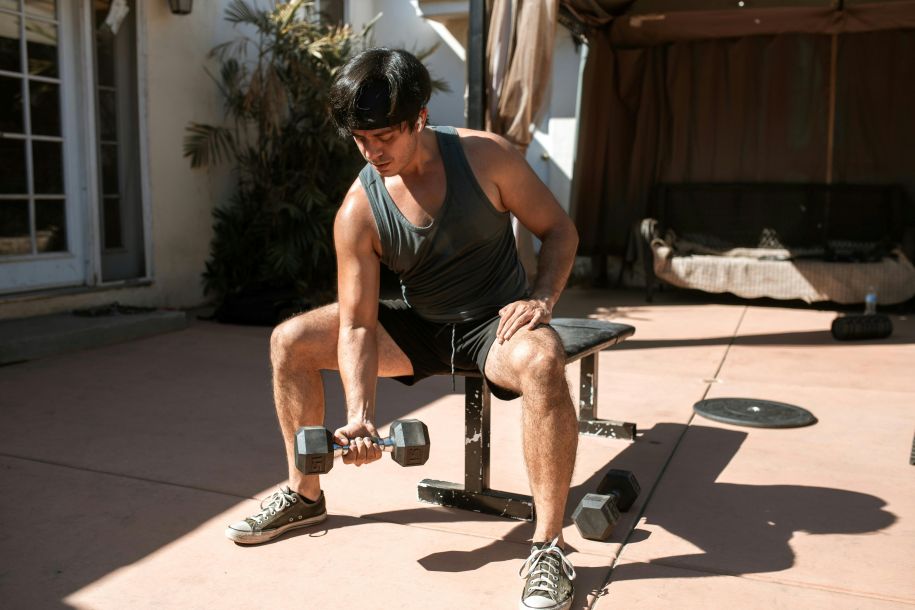
Sitting – stabilizes the lower body to isolate specific upper body muscles. It offers a solid base and provides more support while targeting distinct muscles. It improves the ability to lift heavier weights safely and can be helpful for beginners or people recovering from injury. Examples include seated dumbbell shoulder press, bicep concentration curls, leg extensions, and pull-downs.
Standing – engages more muscles at once and is considered the maximum stability for heavy lifting. Standing while exercising mimics real-life movements which are also known as functional movements. Examples are squats, triceps push-downs, deadlifts, lunges, and rows. People burn more calories while standing since multiple muscle groups are activated. The downside to standing is that you can use your momentum to lift the weight.
Lying Down – best for reducing strain on the spine and joints. These low-impact movements are ideal for relieving back pain and strengthening core muscles. Dumbbell pullovers, glute bridges, bicycle crunches, and leg lifts are some that come to mind.
I hope you are branching out with your strength training routine and not getting stuck doing the same exercises. The variation of positioning can help with boredom and monotony just by modifying how you’re targeting muscles. Integrating all three positions into your strength routine can improve overall strength, stability, and muscle balance by challenging the body in different ways.
Rotating between kneeling, sitting, and standing exercises can also keep workouts more engaging while building balanced strength throughout the body. Lying on your back or side certainly has a place in a well-balanced routine too.
We tend to get set in our ways when it comes to exercise, especially if we haven’t had time to plan our workouts. I would recommend journaling your training sessions to ensure that you are covering your bases and hitting all of the muscle groups. This enhances recovery and reduces the risk of injury.
Strength training doesn’t have to look the same to everyone. Get creative and keep an open mind with the various body positions. Make a point to research and master new exercises. Having a database at your fingertips is important for growth and overall fitness.
Standing, sitting, kneeling, or lying down offers unique benefits. By mixing these positions into your routine, you can create a more adaptable and effective approach to building strength and supporting long-term health. Good luck!
Sign up for my free monthly newsletter at the bottom of my blog or reach out to Kim anytime at nourishandflex@gmail.com
My “Healthy Habits Checklist” can help you stay on track every day.
Follow me on Instagram @kimlivinghealthy